What we do
We help founders and teams name their brands, products and services, and define the identity behind them. We start by listening to everyone who shapes your brand: founders, investors, teams and partners. Then we turn their perspectives into a clear framework, and use that framework to find a name and form that fits.
How it works
- 1
Listen. Each stakeholder completes a short, visual questionnaire. There are no essays to write; people weigh options, slide between ideas and pick what feels right. It takes about 20 minutes.
- 2
Articulate. We bring every voice together to see where your people agree and where they differ. The result is a brand articulation framework: your brand's personality, values, tone and audience, written down clearly.
- 3
Name. We explore hundreds of possibilities across languages, metaphors and sounds before narrowing down. Strong names rarely feel comfortable at first, so we test how a name works, not just how it feels.
- 4
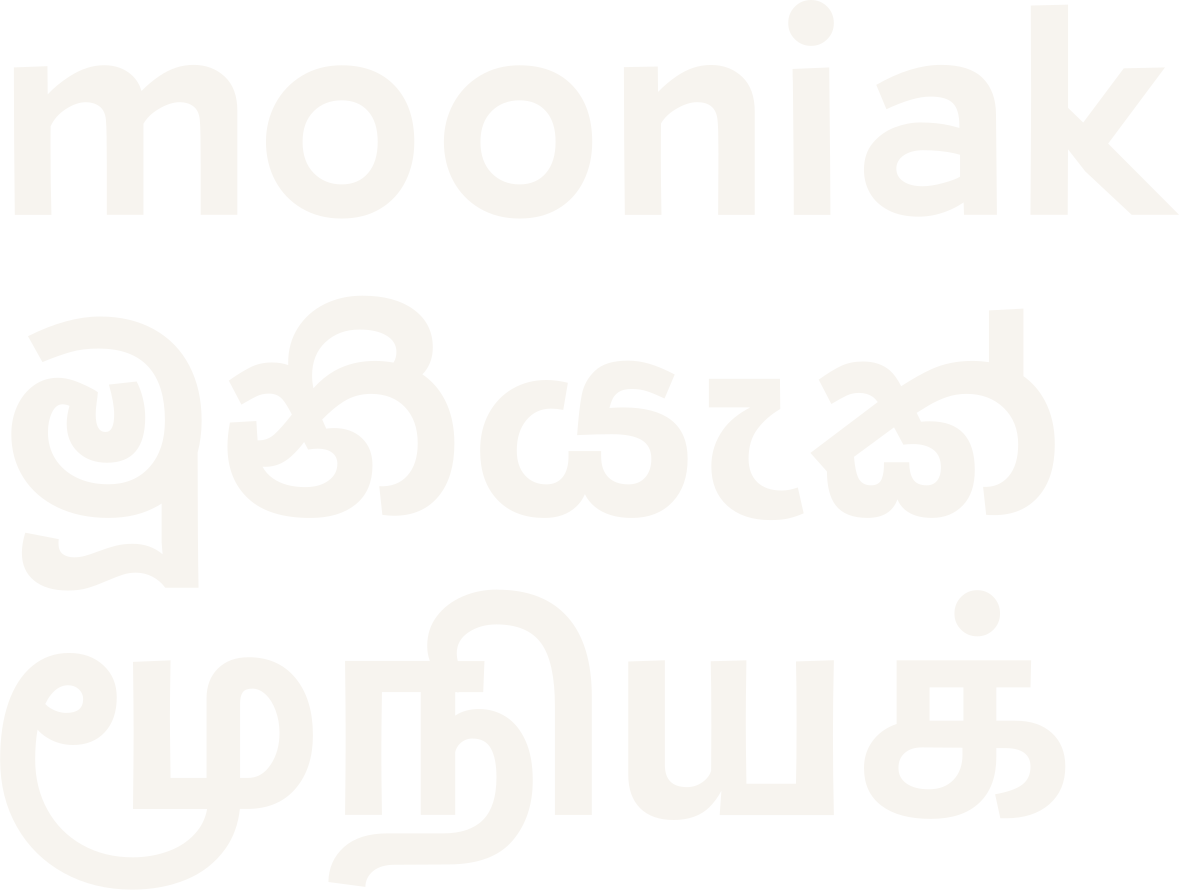
Form. We give the name its visual identity, with typography at its core. That is what Mooniak has done for over a decade, across Sinhala, Tamil and Latin scripts.
What it's built on
Namaroopa is grounded in proven thinking about people, emotion and brands:
Brand Articulation Framework by Public Works: a structured way to define a brand's identity, personality and key ideas, used to guide every design decision.
Jungian archetypes: universal character patterns that help a brand become a relatable persona.
Rasa theory: Bharata's classical Indian theory of emotion, used to decide what people should feel when they meet your brand.
Kapferer's Brand Identity Prism: a six-sided model connecting how a brand looks, behaves, believes, relates, and how its audience sees itself.
These are combined into one framework, with roots in South Asian aesthetics and a global outlook.
What you get
A brand articulation framework your whole team can use
A clear picture of where your stakeholders align and where they pull apart
A shortlist of names, with the reasoning behind each
A visual and typographic identity built around the chosen name
Who it's for
New ventures finding their first name, established businesses ready to evolve, and cultural organisations, hospitality brands and products that need to speak to local and global audiences at once.